Frankie Butler · 19 September 2026
Strategies for Maintaining Data Integrity During Platform Migrations in Note-Keeping Software
Platform migrations in note-keeping software demand careful attention to data integrity because notes often contain structured content, attachments, tags, and metadata that must remain consistent across systems, and organizations frequently encounter issues when shifting from one application to another such as Evernote to OneNote or Notion alternatives.
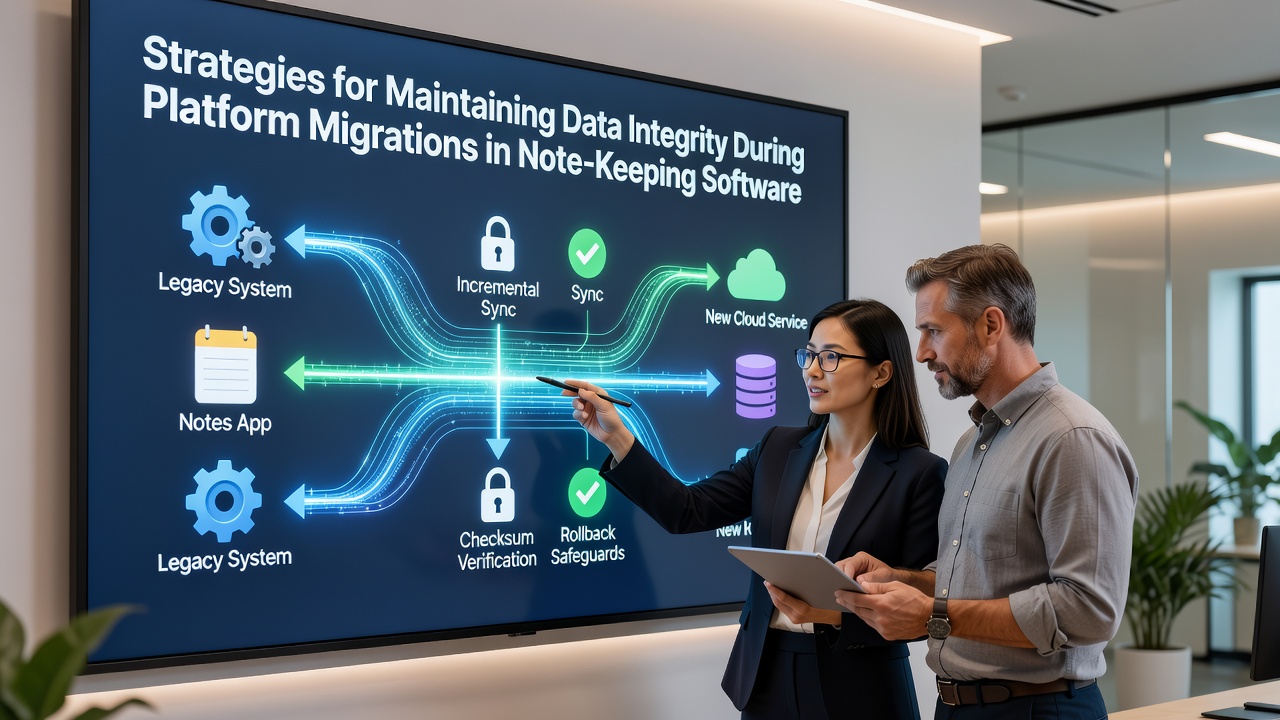
Those who manage these transitions routinely start with comprehensive audits that map every data element to its destination format, and researchers have documented how such audits reduce corruption risks by identifying incompatible fields before any transfer begins, while checksum algorithms verify file contents at each stage so that even minor alterations trigger immediate alerts.
Pre-Migration Assessment and Planning
Experts recommend conducting full inventories of note collections because attachments and embedded links often break during export processes, and data mapping tools help align source fields with target schemas so that categories, timestamps, and revision histories survive intact. Studies from the National Institute of Standards and Technology highlight how organizations that document every dependency before migration achieve higher success rates, since they can create test environments that mirror production setups and run sample transfers to catch format mismatches early.
Backup procedures form the foundation of any reliable plan, and administrators typically create multiple copies stored in geographically separate locations before initiating the move, while incremental snapshots allow teams to restore specific note batches if partial failures occur during the actual transfer window.
Verification Techniques Throughout the Process
Automated validation scripts run comparisons between source and destination records at regular intervals, and these tools flag discrepancies in note counts, attachment sizes, or tag associations so that teams can address problems without halting the entire operation. Hash-based verification methods confirm that files remain unchanged during transit, and parallel monitoring dashboards display real-time integrity metrics that let observers intervene quickly when anomalies appear.
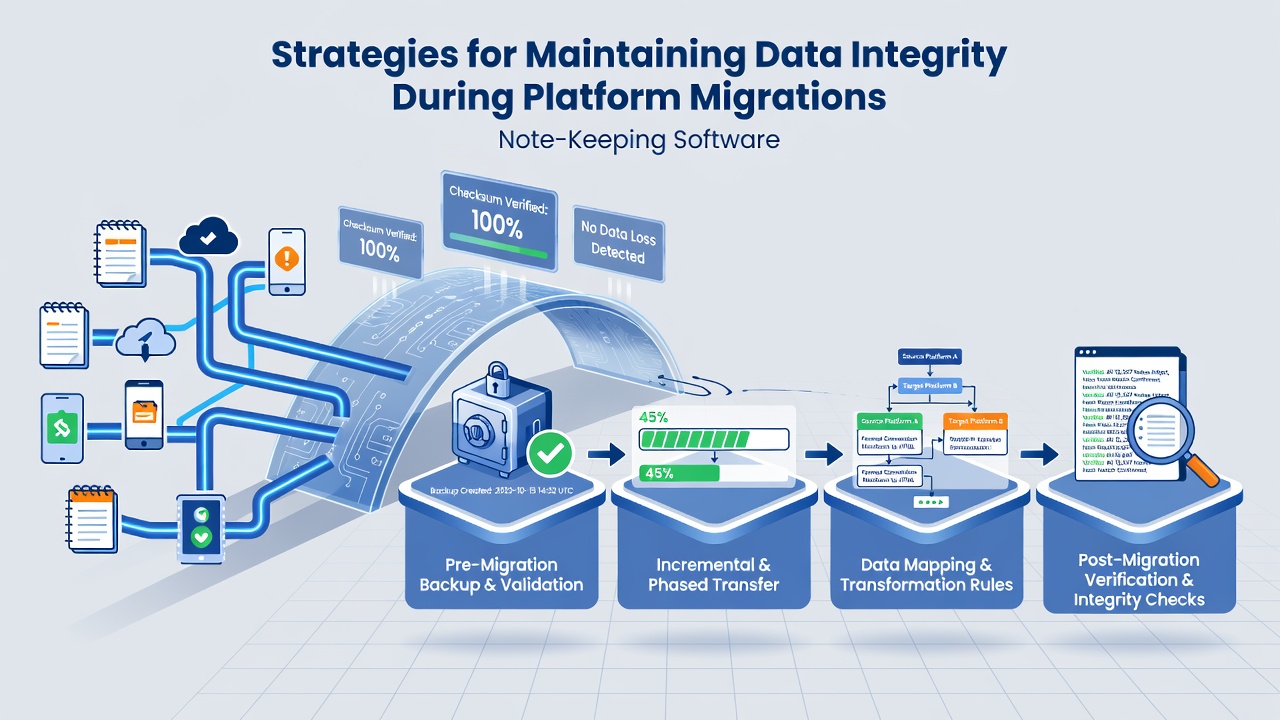
Those who've handled large-scale note migrations observe that combining manual spot checks with automated reports provides the most reliable assurance, because human reviewers can catch contextual issues that algorithms overlook such as broken internal links between related notes. European Union Agency for Cybersecurity guidelines emphasize layered verification approaches that include both cryptographic checks and functional testing after data lands in the new system.
Post-Migration Validation and Ongoing Monitoring
Once the transfer completes, teams execute full reconciliation processes that compare total note volumes, search functionality, and export capabilities against original benchmarks, and any deviations prompt targeted re-imports of affected sections. Long-term monitoring tracks whether note accessibility remains stable over weeks and months following the cutover, since integrity problems sometimes surface only after users begin active editing sessions in the new platform.
With new data protection frameworks slated for implementation in September 2026, many organizations are already aligning their migration protocols wth emerging standards that require documented audit trails for every data movement, and this preparation helps ensure continued compliance as regulatory expectations evolve. Training programs prepare end users to report anomalies they encounter during initial use, which adds another layer of real-world validation beyond technical checks.
Conclusion
Effective strategies combine thorough planning, continuous verification, and structured post-migration review so that note-keeping platforms can transition without compromising the accuracy or accessibility of stored information, and organizations that apply these methods consistently report smoother handovers with minimal disruption to daily workflows.