
Leon Vogel · 31 October 2026
How Note Archiving Practices Have Evolved with Advances in Cloud Storage Technologies for Professional Users
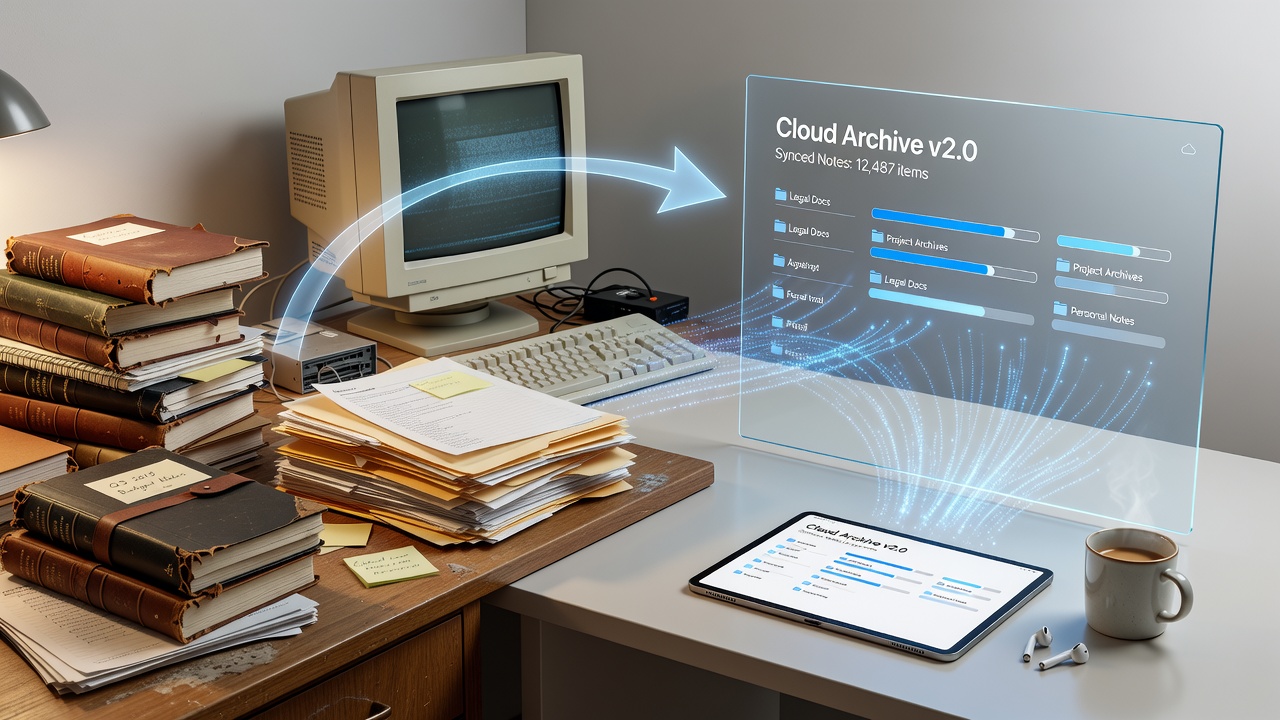
Professionals once relied on physical filing cabinets and local hard drives to store meeting notes, project outlines, and research summaries, yet those methods imposed strict limits on capacity and retrieval speed. Cloud storage technologies began transforming these routines in the early 2000s when providers introduced scalable remote servers that handled growing volumes of unstructured text without requiring on-site hardware upgrades. Data from industry analyses show adoption rates climbing steadily as bandwidth improved and subscription models lowered entry barriers for individual users and teams alike.
Early Limitations and Initial Shifts
Before widespread cloud access, professionals archived notes on personal computers or shared network drives that demanded manual backups and offered little flexibility when devices failed or staff changed locations. Researchers documented frequent data loss incidents tied to hardware degradation, while retrieval often required physical presence at a specific workstation. The arrival of consumer-oriented cloud services prompted early adopters to experiment with uploading text files to remote repositories, though initial transfer speeds and security concerns slowed broader uptake. Observers noted that law firms and consulting groups led the way because their workflows generated repetitive document sets that benefited from centralized access points.
Expansion Through Scalable Infrastructure
Cloud platforms expanded storage quotas dramatically during the 2010s, allowing professionals to retain years of annotated reports and correspondence without deleting older entries to free space. Synchronization protocols enabled automatic updates across multiple devices, so a consultant editing notes on a tablet could see changes reflected instantly on a desktop machine back at the office. Studies from research institutions indicate that synchronization reduced version conflicts by measurable margins compared with earlier email-based sharing methods. Professionals in fields such as engineering and healthcare began integrating cloud folders directly into daily routines, treating remote archives as extensions of local workspaces rather than separate backup locations.
What's interesting is how these infrastructure gains altered search and organization habits without relying on specialized tagging systems. Simple folder hierarchies persisted alongside full-text indexing features that cloud providers embedded into their interfaces, letting users locate specific passages across thousands of documents in seconds. Figures from technology adoption surveys reveal that mid-sized enterprises reported productivity lifts once staff stopped spending hours reconstructing lost files from scattered email threads.
Integration with Collaboration Platforms
By the mid-2020s, major cloud providers offered native connectors that linked note archives to project management and communication tools, creating seamless pipelines where new entries appeared in shared repositories without manual uploads. According to reports compiled by international standards bodies, these connectors cut administrative overhead for distributed teams operating across time zones. Professionals handling regulatory compliance documentation found value in audit trails generated automatically by cloud systems, which recorded access timestamps and modification histories without extra configuration steps.
Take one architecture firm that migrated its internal knowledge base to a cloud environment in 2024; staff subsequently retrieved reference notes from job sites using mobile connections that remained stable even in areas with intermittent coverage. Similar patterns appear in academic research groups that maintain longitudinal project logs spanning multiple funding cycles. Data compiled through 2025 shows continued growth in cross-border usage, with users in the European Union and Australia adopting region-specific cloud instances to align with local data residency expectations.
Developments Observed in October 2026
As of October 2026, cloud storage vendors have introduced tiered archiving options that automatically move infrequently accessed notes to lower-cost cold storage layers while keeping recent entries in high-speed caches. Industry reports indicate these tiers now support sub-second retrieval times for most professional queries, reducing the previous trade-off between cost and speed. Researchers tracking enterprise deployments note that hybrid setups combining private clouds with public providers have gained traction among organizations balancing control with elasticity.
Yet the core shift remains the same: professionals no longer treat archiving as a discrete end-of-project task. Instead, notes flow continuously into cloud repositories where they remain queryable alongside active work. External analyses from academic centers confirm that this continuous model supports knowledge retention across staff turnover, because incoming team members inherit searchable histories rather than starting from incomplete handovers.
Conclusion
Cloud storage advances have reshaped note archiving from a static, location-bound activity into a dynamic, device-agnostic process that scales with organizational needs. Professionals across sectors now maintain expansive, interconnected repositories that support ongoing reference and collaboration without the physical constraints of earlier decades. Continued infrastructure refinements suggest further refinements in access speed and integration depth, though the fundamental pattern established over the past two decades centers on centralized, synchronized availability.